

How Hormesis, Allostatic Load, and General Adaptation Syndrome Explain Burnout and Growth
Most people think stress is the problem.
It isn’t.
The problem is the dose.
Too little stress and nothing changes.
Too much stress and you break down.
The right amount of stress, paired with recovery, is what makes you stronger.
If you’ve ever felt stuck, burned out, or “tired but wired,” the answer isn’t usually more motivation.
It’s understanding how stress and adaptation actually work.
Let’s break it down.
What Is General Adaptation Syndrome?
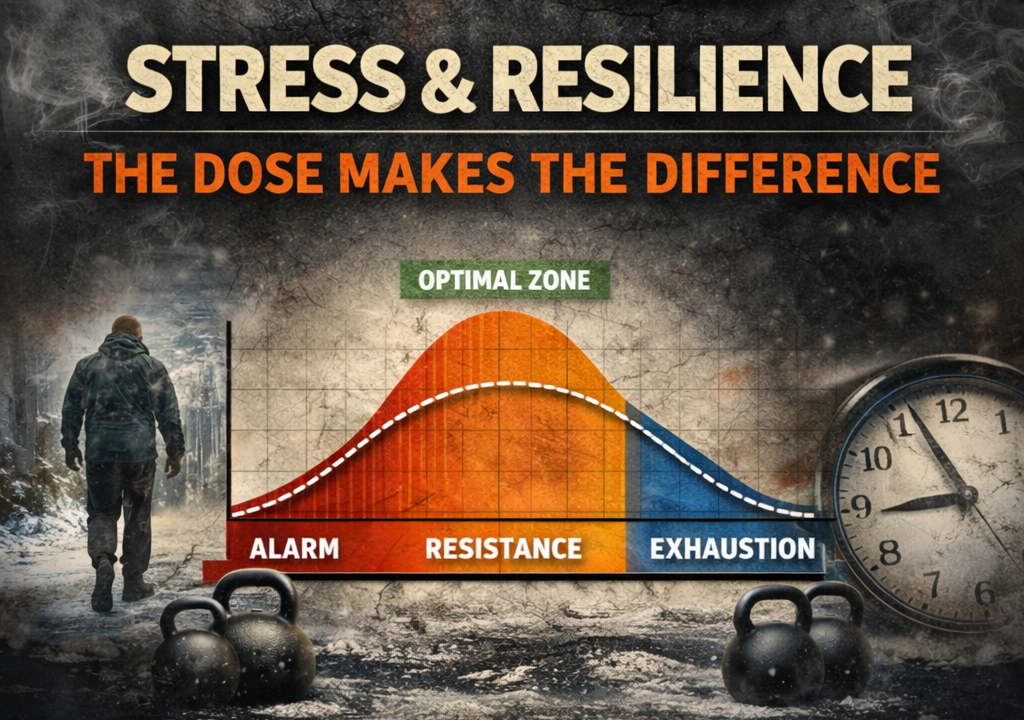
In the 1930s, endocrinologist Hans Selye introduced the concept of General Adaptation Syndrome (GAS). It describes how the body responds to stress in three predictable stages:
- Alarm
- Resistance
- Exhaustion
Alarm is the initial stress response.
Heart rate increases. Hormones rise. The system activates.
Resistance is where adaptation happens.
If recovery follows the stress, the body upgrades. Stronger muscles. Better stress tolerance. Improved resilience.
Exhaustion happens when stress continues without sufficient recovery.
The system stays on. Fatigue accumulates. Performance declines.
This model applies to everything:
• Strength training
• Work stress
• Emotional stress
• Lack of sleep
• Life transitions
Your body doesn’t differentiate between a heavy squat and a hostile email. It only recognizes stress load.
Hormesis: Why Small Stress Makes You Better
Hormesis is the principle that small, controlled stress improves function.
It’s the biological explanation for why training works.
A manageable stressor followed by recovery creates adaptation.
Strength training is hormesis.
Cold exposure is hormesis.
Learning a difficult skill is hormesis.
Having a hard conversation is hormesis.
The key is dose.
Short stress + full recovery = stronger system.
This is where many high performers get it wrong. They assume “more stress” equals “more growth.”
It doesn’t.
The goal isn’t grinding harder.
The goal is applying a small challenge and earning the recovery.
Practical Ways to Use Hormesis
If you want to build resilience intentionally, here are controlled stressors you can apply:
1. Finish One Hard Set
Add one additional set at about RPE 7. Challenging, but not maximal.
2. Short Intensity Bursts
10–20 seconds hard effort.
1–2 minutes easy recovery.
Repeat 4–6 rounds.
3. Cold Finish
30–90 seconds of cool water at the end of a shower. Build gradually.
4. Uncomfortable Practice
Five minutes on the skill you avoid. Mobility. Breathing. Technique.
5. Slight Time Pressure
Set a 10-minute timer. Complete one meaningful task. Stop when time ends.
The rule is simple:
You should feel challenged, not crushed.
If you can’t recover from it, it wasn’t hormesis. It was overload.
Allostatic Load: When Stress Accumulates
Now we zoom out.
Allostasis means stability through change. Your body constantly adjusts heart rate, hormones, inflammation, and energy levels to maintain balance.
Allostatic load is what happens when those adjustments never stop.
Work stress + poor sleep + training + caffeine + life.
When recovery is missing, the system stays “on.”
That’s when you feel tired but wired.
That’s when motivation disappears.
That’s when workouts feel harder than they should.
Burnout isn’t weakness. It’s accumulated stress without relief.
The Difference Between Growth and Burnout
Hormesis and allostatic load use the same stress response system.
The difference is recovery.
Stress + Recovery = Growth
Stress – Recovery = Breakdown
Most people don’t have a discipline problem.
They have a load management problem.
Recovery Is What Locks in Adaptation
If stress is the stimulus, recovery is where progress happens.
Here are five evidence-based recovery strategies that matter:
1. Establish a Sleep Routine
Consistent bedtime and wake time most days.
Sleep is non-negotiable for adaptation.
2. Daily Easy Movement
20–40 minutes of walking.
Low stress. High return.
3. Eat Like You Train
Protein at each meal.
Enough carbohydrates to match workload.
Under-fueling amplifies stress.
4. Downshift on Purpose
Five minutes of quiet breathing. No phone. No input.
Let your nervous system reset.
5. Deload When Life Is Heavy
Reduce training intensity, volume, or both for 5–10 days during high life stress.
This isn’t weakness.
It’s intelligent performance.
Why High Performers Burn Out
Ambitious people often stack stress:
• Hard training
• Career pressure
• Family responsibility
• Caffeine
• Poor sleep
• No true downtime
They stay in the Resistance phase too long.
Eventually, they drift toward Exhaustion.
The solution isn’t lowering ambition.
It’s better dosing.
How to Manage Stress Intentionally
If you want to apply this practically:
- Identify your major stress buckets
- Adjust training based on life load
- Keep micro stress intentional
- Protect recovery aggressively
- Periodize life like you periodize training
Your body is always adapting.
The real question is:
Are you adapting upward, or downward?
Final Takeaway
You don’t need less ambition. You need better stress management.
The dose makes the difference. Small, intentional stress followed by real recovery builds resilience.
Chronic stress without relief builds burnout. Understanding the science behind stress adaptation gives you control.
Now the choice is yours.