Client Case Study Report: Senior Health Rehabilitation Through Nutrition, Strength, and Habit Rebuilding
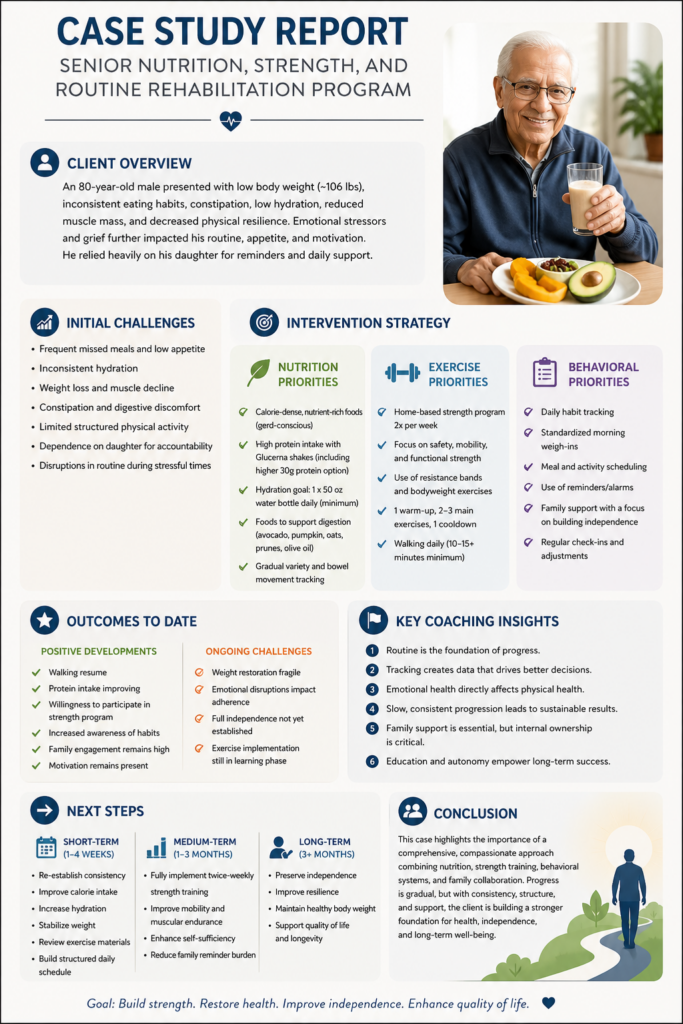
This case involves an elderly male client, approximately 80 years old, who began coaching intervention due to progressive concerns related to low body weight, inconsistent eating habits, declining muscle mass, constipation, reduced hydration, and overall physical frailty. At baseline, the client presented with multiple interconnected challenges common in aging populations, including reduced appetite, disrupted meal patterns, low protein intake, diminished physical resilience, and a growing reliance on family members for accountability.
A significant concern early in the process was the presence of sarcopenia-related muscle loss, accompanied by visible postural decline and concerns regarding long-term independence. The client’s nutritional intake was initially insufficient, particularly with protein consumption falling well below ideal levels for preserving muscle tissue. Hydration was also inconsistent, further contributing to digestive complications such as constipation and occasional painful bowel movements.
Compounding these physical issues were emotional stressors, including grief and family challenges, which periodically disrupted progress by negatively impacting appetite, daily structure, and motivation. These setbacks reinforced the importance of not simply addressing physical health in isolation, but rather developing a broader system focused on behavioral consistency, emotional resilience, and sustainable habit formation.
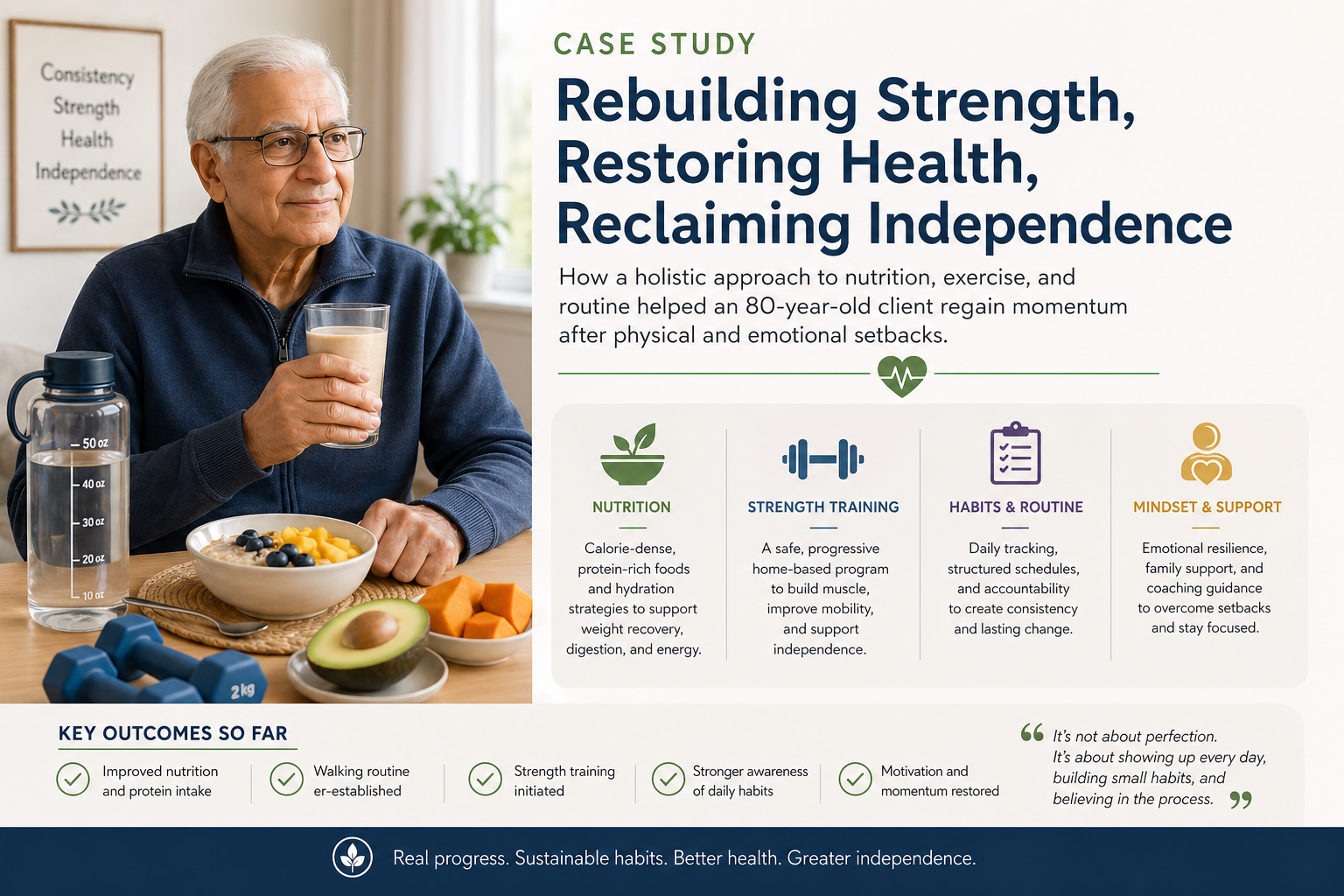
The intervention strategy centered first on nutritional stabilization. Rather than introducing aggressive dietary restrictions, the primary objective was to increase caloric intake, protein consumption, and digestive support through nutrient-dense, GERD-conscious food options. Foods such as avocado, pumpkin, Glucerna shakes, and other calorically supportive items were emphasized due to their combination of micronutrient value, digestive tolerability, and energy density. Protein supplementation became a cornerstone of the program to address muscle preservation, while hydration goals were standardized to improve both energy and bowel regularity.
Alongside nutritional interventions, physical rehabilitation was introduced conservatively through a home-based strength and mobility framework. Given the client’s age, current physical condition, and limited exercise history, programming focused on foundational movement patterns, mobility, and gradual strength development rather than aggressive performance outcomes. Initial goals prioritized safety, consistency, and exercise familiarity through low-volume sessions centered on bodyweight movements, resistance bands, posture correction, and functional strength development. Walking remained an important baseline activity for maintaining mobility and stimulating appetite.
My 78 years old dad was struggling with severe weight loss! After working with Dr. Tahir he has gained vitality, confidence and is slowly reaching his ideal weight.
A critical component of the coaching process involved shifting from external dependence toward internal ownership. Family members, particularly the client’s daughter, played an essential role in supporting implementation, but long-term success required creating systems the client could eventually manage independently. Daily tracking tools, structured meal schedules, hydration monitoring, standardized weigh-ins, and reminder systems were developed to create repeatable routines. This emphasis on structure proved especially important given the client’s tendency to lose consistency during emotionally difficult periods or when outside his daughter’s immediate environment.
Over the course of the intervention, progress was characterized less by rapid transformation and more by gradual stabilization. Positive outcomes included improved walking consistency, better protein intake, increased willingness to participate in structured exercise, stronger family collaboration, and improved awareness of daily habits. However, challenges remained, particularly regarding sustained weight restoration, bowel regularity, and ensuring routine consistency during emotionally disruptive events.
This case illustrates that in elderly populations, meaningful health improvement often depends not on extreme interventions, but on carefully balancing nutritional support, movement rehabilitation, emotional awareness, and behavioral systems. The ultimate goal extends beyond simple weight gain or exercise compliance; it is the reconstruction of a sustainable lifestyle framework that preserves physical function, independence, and quality of life.
Through consistent coaching, practical adjustments, and family-supported accountability, this client is actively working toward improved resilience, healthier aging, and greater long-term autonomy. This case underscores the value of evidence-based, individualized coaching strategies that prioritize realistic progression, dignity, and sustainable habit development in older adults.