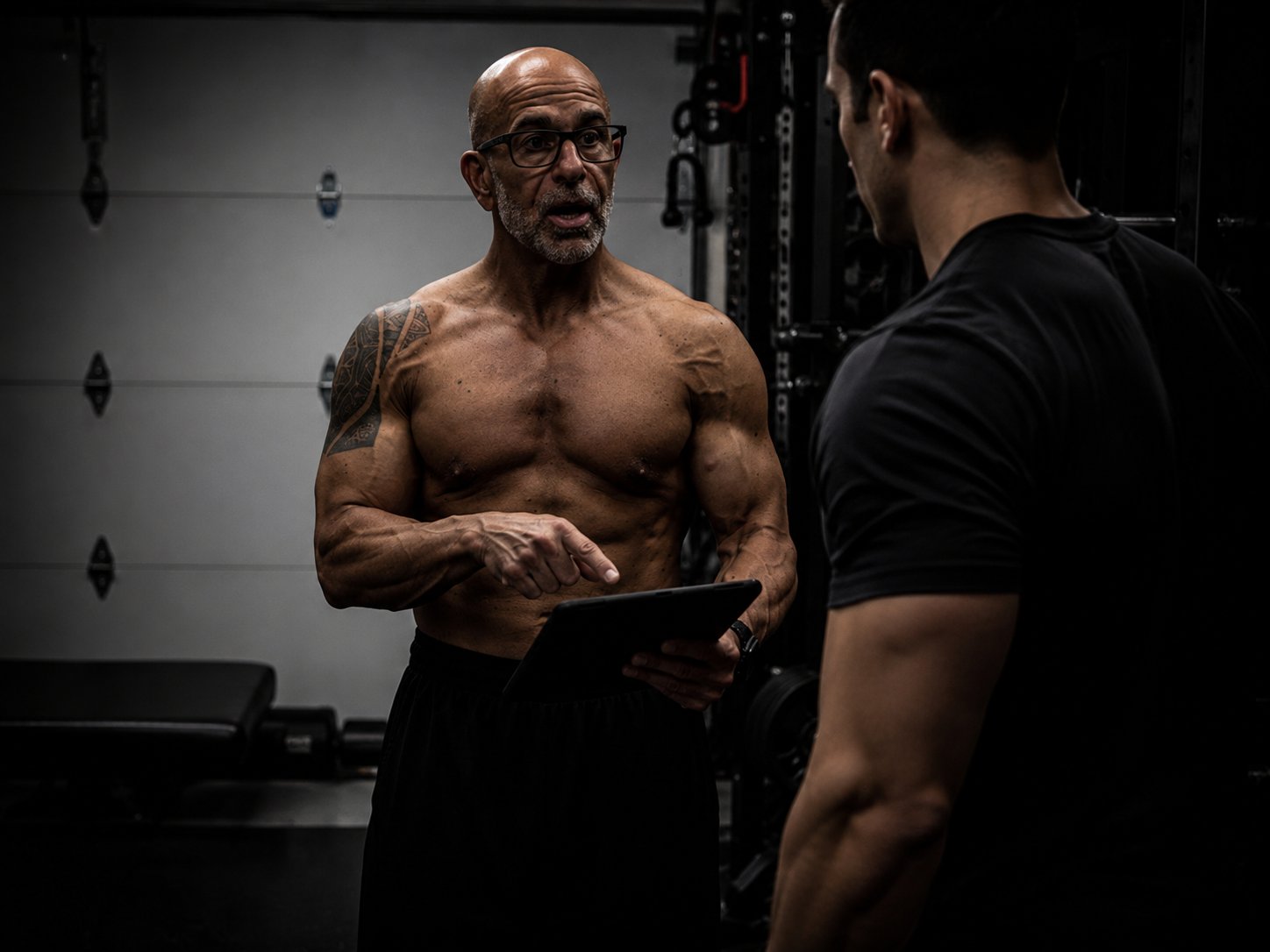
I know what it feels like to have to start over.
I know what it feels like to be physically capable and then suddenly not be — to lose the ability to train, watch your conditioning disappear, gain weight, feel disconnected from the person you used to be, and wonder whether you are ever going to feel like yourself again.
And I know what it feels like to rebuild from almost nothing.
That experience changed me as a person, and it changed the way I coach.
Fitness Helped Change the Direction of My Life
I grew up in Santa Ana, California, in an environment where it was easy to get pulled in the wrong direction. As a teenager and young adult, I was not living the healthiest or most productive lifestyle. I loved sports, especially basketball, but I was also rebellious — hanging around the wrong influences, staying out late, and making decisions that were not helping me move forward.
Fitness became one of the things that changed that.
At first, I trained because I wanted to be better on the basketball court. I wanted to jump higher, move better, get leaner, and stop constantly injuring my ankles. That led me into weight training. Weight training led me into nutrition. Nutrition led me into education. And little by little, the person I was becoming started to replace the person I had been.
Training gave me structure, purpose, and something productive to chase. It became a major part of my identity.
Coaching Started Long Before the Degrees
In the late 1990s, I began working in sports nutrition. People would come into the store asking what supplement they should buy, and instead of immediately trying to sell them something, I usually started asking questions.
What are you eating? What does your training look like? What are you actually trying to accomplish?
Sometimes the answer was that they did not need a supplement at all. They needed a better framework. That became one of the principles that has stayed with me throughout my career: education first.
I spent years helping people understand training, nutrition, body composition, and performance. I managed and operated nutrition businesses, trained seriously myself, and helped coach groups of people in gyms throughout Southern California.
I loved it.
Then my health collapsed.
When My Health Fell Apart
Around 2006 to 2007, everything changed. After years of pushing hard — long hours, hard training, poor sleep, constantly going — my body eventually stopped cooperating.
My exercise tolerance disappeared. There were periods when walking for five or ten minutes could cause significant symptoms. I could not train the way I had trained. Eventually, I could not work the way I had worked. And for someone whose identity had become so deeply connected to health, fitness, and physical performance, that was devastating.
I dealt with years of poor health, exercise intolerance, physical symptoms, anxiety, depression, and a complete loss of confidence in what my body could handle.
There was no simple diagnosis. There was no quick fix. And there was definitely no 12-week comeback. For years, I did not know whether I would ever be able to train normally again.
My Transformation Wasn’t a Before-and-After Photo
My comeback happened in very small pieces.
A short walk. Then a slightly longer walk. A few exercises. A couple of sets. A week where I felt decent. Then a setback. Then starting again. There were stretches where I could train for a week or two and then symptoms would return and knock me back down. I had to learn patience in a way I never had before.
Eventually, I started making progress. By around 2016 to 2017, I was able to train more consistently again. I started rebuilding my body. I started rebuilding my conditioning. I started rebuilding my confidence.
I regained my Certified Strength and Conditioning Specialist credential and eventually went back to school for a master’s degree in exercise science, and then doctoral work in health and human performance.
But the biggest transformation was not academic. It was learning what it feels like to be the person on the other side of the coaching relationship.
That Experience Changed the Way I Coach
Before going through my own health problems, I could be much more rigid. Follow the program. Train harder. Eat better. Be disciplined. And there is still value in discipline.
But life taught me that there is a huge difference between knowing what someone should theoretically do and understanding what they are actually capable of doing right now.
I understand what it feels like when exercise is intimidating.
I understand what it feels like when your body does not respond the way you expect it to.
I understand what it feels like to be deconditioned — to look in the mirror and know you are not where you want to be.
I understand frustration. I understand setbacks. And I understand how powerful it is when you finally start seeing progress again.
That does not mean I will tell you everything is easy. It means I will work with the person standing in front of me — not some imaginary perfect client.
Why I Built APEX Tactical Athletics
APEX Tactical Athletics was built around a simple idea: help people build the capacity to handle the demands of their lives.
Some people come to me after physical therapy. Some have dealt with pain or injury. Some are trying to lose significant body fat. Some want to get stronger. Some want to feel athletic again. Some simply realize they have lost physical capacity over the years and want it back.
I can relate to that. Because I had to earn mine back too.
My job is not to judge where you are starting. My job is to help you move forward.
Education Matters. Experience Matters Too.
I believe deeply in education and evidence. My background includes graduate education in exercise science and health and human performance, along with the Certified Strength and Conditioning Specialist credential. That education matters.
But I never want someone working with me to feel like they are being lectured by an academic who has only experienced fitness through textbooks and research papers.
I have been the person struggling. I have been the person who could barely exercise. I have been the person who lost their fitness, who had to change their body, who had to start again.
The science helps me understand the process. My own experience helps me understand the person going through it. I think good coaching requires both.
Your Today Does Not Have to Be Your Tomorrow
One of the biggest lessons of my own journey is that your current situation is not necessarily permanent.
There were years when I genuinely believed I might never train normally again. Today, training is once again a major part of my life. That did not happen overnight. It took patience, work, setbacks, education, experimentation, and a willingness to keep starting again.
That is also where the name of my podcast, The Next Set, comes from. For me, this chapter of my life is my next set. And I believe everyone eventually faces their own version of that moment.
Maybe you have been injured. Maybe you have gained weight. Maybe work and family took priority for years. Maybe your health changed. Maybe you simply woke up one day and realized you do not feel like yourself anymore.
That does not mean the story is over. It may just mean it is time for your next set.